Entomologist Sepp Settele warned that a million species faced extinction, yet refused to give in to pessimism
Josef Settele turned a childhood butterfly collection into a career in agricultural ecology. As one of three co-chairs of the 2019 IPBES Global Assessment, he helped warn that around a million species faced extinction, yet he kept arguing against despair.
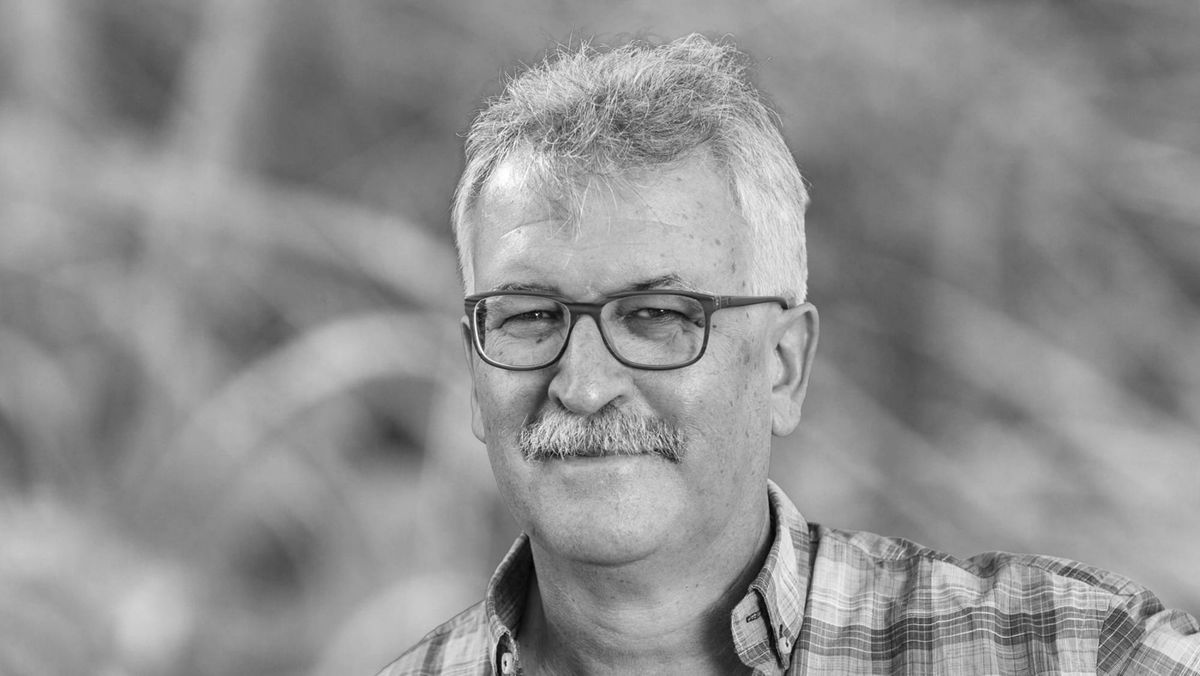
When Sepp Settele came home from school in the Allgäu, in southern Germany, his mother was often waiting in the garden with a butterfly net. “I’ve caught something else for you!” she would call. He had started collecting in the 1960s, at six or seven, and he supposed she reckoned that a boy chasing butterflies was at least not getting into mischief. He was a miserable pupil, he admitted. The butterflies were more interesting.
They were also, he noticed early, in trouble. The Allgäu was a textbook case of intensified land use, and the verges and embankments were still sometimes burned. His mother always said the same thing: all the insects die there. He went to the University of Hohenheim to study agricultural biology, partly to learn what farming did to butterflies and partly to pursue basic questions of evolution. His doctorate, completed in 1992, examined how intensified rice growing affected the arthropods of terraced paddies in the Philippines. Years later a project he coordinated in South-East Asia found that in irrigated rice, pesticides frequently caused pest problems rather than solving them.
His favorites were the large blues, whose caterpillars fool ants with a chemical disguise, get carried into the nest, and eat the brood. They were not pretty, he conceded, but the “sex and crime” sold. When some turned up in the ditches around Stuttgart airport, residents took to their local newsletters to demand the ditches be looked after.
That knack for enlisting the public produced, in 2005, Germany’s butterfly monitoring scheme. A television programme took up the idea, and viewers signed up online while the broadcast was still running. Volunteers have walked set routes counting butterflies ever since, and their records are now pooled with similar schemes across Europe.
He became famous, though, for a grimmer count. As one of three co-chairs of the global assessment by IPBES, an intergovernmental science body, published in 2019, he helped tell the world’s governments that around one million species of animals and plants were threatened with extinction. Every sentence of its summary had been agreed by member countries’ delegations. The report helped make the loss of nature an issue to rank with climate change. French president Emmanuel Macron gave its authors an hour.
He was careful with the number. For insects the team had been deliberately conservative, not wanting to seem alarmist. He would not call it a sixth mass extinction, a phrase he thought catchy rather than scientific. And the million carried a condition that headlines tended to drop: in the coming decades, if nothing is done to counteract it.
That condition was where he chose to stand. His last book, written with Dirk Rossmann, a businessman, and published in 2025, was called “Keine Zeit für Pessimismus” (No Time for Pessimism). What made him hopeful, he said, was the experience that life is dynamic and keeps producing surprises, often good ones. One should learn from the past without being discouraged by it.
Colleagues wondered how someone who knew the data so well stayed so cheerful. He was easy to find at conferences: outside, the man in the waistcoat, smoking, available to whoever wanted a word. A school friend who walked a route for the monitoring program, between intensively farmed meadows and fields, recorded three butterflies in all the years: a brimstone, a white and a painted lady. Settele had told him not to expect much. The friend could never share his optimism, he wrote, but without hope nothing good moves forward.
The day before he died, Settele sought out a young IPBES fellow, who had known little about him, to congratulate him on an initiative and say he would like to take part. Who, one mourner asked, will map his butterflies now? The project he founded offers one answer: anyone willing to walk a route and count.
Josef Settele died on October 9th, aged 65.