Christine von Weizsäcker was a leading voice in biodiversity diplomacy
Christine von Weizsäcker helped shape international biodiversity agreements and championed the rights of Indigenous peoples in negotiations. A biologist, she argued that mistakes were inevitable and that societies must guard against those whose consequences could not be undone.
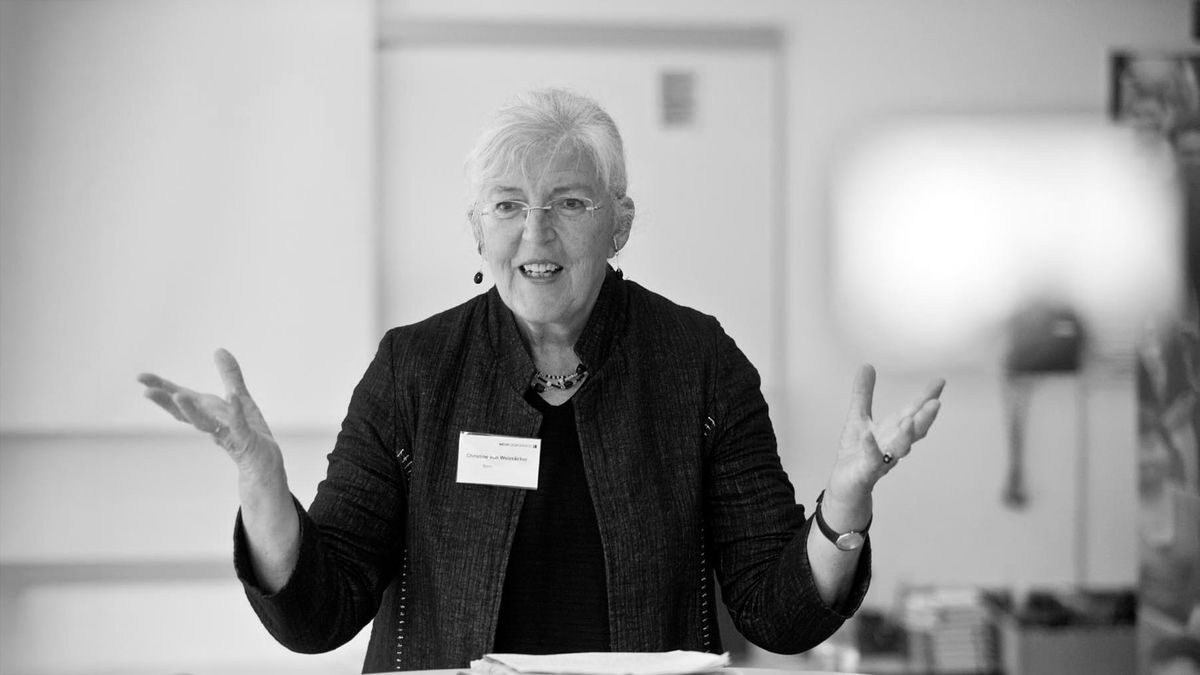
Christine von Weizsäcker was fascinated by mistakes. A biologist, she knew they were part of life; evolution depended on them. What bothered her was people's growing power to make errors that could never be undone.
She called the ability to accommodate mistakes Fehlerfreundlichkeit, or “error-friendliness”. However much science knew, it could not foresee every consequence of meddling with nature, so technologies and institutions ought to be built to survive being wrong. The alternative was to bet that people would always get things right.
Von Weizsäcker brought this thinking to international biodiversity negotiations, above all the talks behind the Cartagena Protocol on Biosafety, adopted in 2000 to regulate the international movement of living modified organisms. A year earlier the talks had nearly fallen apart, with countries worried about genetically modified organisms on one side and those guarding agricultural trade on the other.
Alongside the environmental groups in the room, she pored over draft language and the rules of procedure. The deal that emerged set out how countries could decide for themselves whether to import certain living modified organisms.
Meetings of the Convention on Biological Diversity became a fixture of her life for decades afterwards. Colleagues remembered her at the back of the room, taking notes, now and then reminding delegates of what they had promised years before. The exact wording of agreements, and the quarrels behind it, stayed with her.
Indigenous representatives and small civil society groups came to her for advice, since many could not afford to follow talks that ran for weeks, with several discussions going on at once. What she offered was a grasp of the procedural rules, and of how swapping a single word could change what a text meant. A certificate of appreciation from the Indigenous Women’s Biodiversity Network pleased her more than most of the formal honors she collected.
Most of the work was done from her home in Germany’s Black Forest, where she and her husband, the environmental scientist and politician Ernst Ulrich von Weizsäcker, brought up five children. He once joked that in some circles it was handier to introduce himself as Christine’s husband than by his own name. Holding no government post, she was still valued by campaigners and negotiators for her counsel, and younger activists sought her out, sometimes in meetings that dragged on past midnight.
Her seventies brought no slowdown. In 2022 she went to Montreal for the talks that produced a new global agreement to halt and reverse biodiversity loss. Faith in technological fixes for environmental problems left her unconvinced, and she kept arguing for precaution, especially where an intervention might be irreversible.
Von Weizsäcker died on October 16th, aged 82. She had watched governments make grand promises to protect nature and then miss them, yet the institutions and procedures she knew so well remained her tools, and she went on showing others how to use them.
She had less faith in technologies that left no room for mistakes. In 2011 she put it plainly: “A technology that tolerates no mistakes is hostile to humanity.”