Jason Clay wanted big business to help save nature
Jason Clay, who died on November 16th aged 75, sought to reduce environmental damage by influencing major agricultural commodity buyers and establishing sustainability standards.

In 1988 Jason Clay attended a Grateful Dead concert at Madison Square Garden and met a man who wanted save rainforests. Clay, an anthropologist who had worked with Indigenous communities, asked what he did for a living.
"I make ice cream," the man replied.
It was Ben Cohen of Ben & Jerry's.
Within a year, Rainforest Crunch was on supermarket shelves. At one point, Clay’s operation was buying around a fifth of the world's Brazil nuts. It paid gatherers two or three times the going rate, and other buyers raised their prices to compete.
The people gathering the nuts weren't generally the ones clearing the forests. Ranchers and loggers had little reason to change what they were doing, and Clay eventually called Rainforest Crunch a failure. "We were attacking the wrong driver," he explained in a 2010 TED talk.
Clay, who died on November 16th aged 75, spent more than three decades at the World Wildlife Fund (WWF), where he worked to change how major companies bought agricultural commodities linked to deforestation and other environmental problems.
Born in 1951, he grew up near King City, Missouri, one of seven children on a small farm. His mother tended a large garden and taught the children to save what they couldn't eat.
When he was 15, his father died in a tractor accident. Clay helped his mother manage the farm. Dyslexic and outside the top quarter of his high-school class, he nevertheless won a scholarship to Harvard. He later studied at the London School of Economics and earned a doctorate from Cornell.
"I went to college to get away from farming," he said.
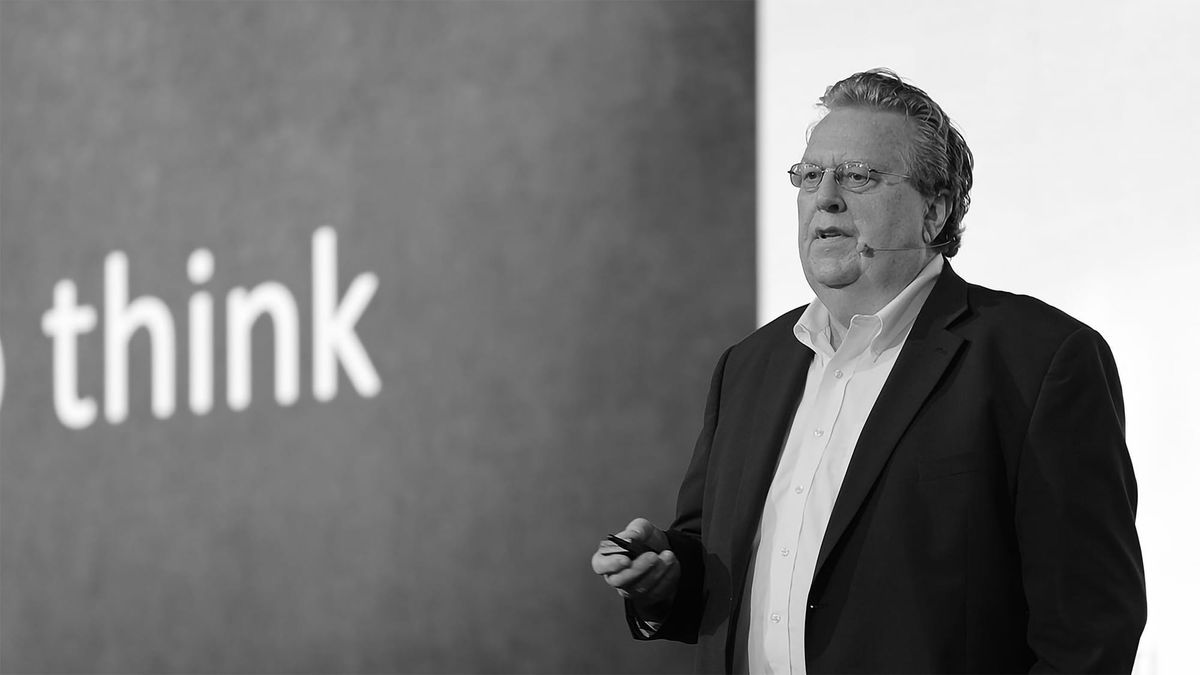
At WWF, Clay initially worked on developing markets for sustainable products. Clay calculated that just 100 companies handled a quarter of the trade in 15 commodities WWF had identified as major threats to biodiversity. The same company names kept appearing across different commodities. "There's Cargill everywhere," he told his TED audience.
He wanted rivals like Coca-Cola and Pepsi to agree on environmental rules and keep fighting over everything else, an idea he called precompetitive collaboration.
Clay eventually grew dissatisfied with the certification programs he had helped create. He didn't expect shoppers to figure out how something was made in the few seconds it took to grab it off the shelf. Standards often became "Christmas trees," he complained, as more requirements were added, driving up costs. Farmers who complied could find themselves undercut by those who didn't. Voluntary schemes also depended on companies wanting to do the right thing. "Most probably don't," he said.
Clay often held meetings at home, in his kitchen or around the dinner table. Asked what ordinary people could do to improve food systems, he advised them to eat their leftovers.
💐 His full obituary: Jason Clay, who persuaded big business to help save nature, has died at 75