Alberto Villegas knew Chile’s flowering desert as a herder and protected it as a ranger

For much of the year, Llanos de Challe National Park is dry and sparsely colored. Cacti rise from gravel and bare hillsides. Seeds remain underground, sometimes for years. After sufficient winter rain, flowers cover parts of the coastal desert in white, yellow, violet, and red. Most visitors arrive during the few weeks when the bloom is at its height.
Alberto Villegas knew the park in every season. Long before he became a ranger, he traveled through the Atacama Desert as a criancero, herding goats between the mountains and the coast. He learned where animals could find forage, how the weather moved across the hills, and how far a person could travel before needing water.
Villegas, who died last month, aged 72, was born in 1954 in El Tránsito, a village in Chile’s Huasco province. His parents died when he was young, and he and his siblings were raised by Rafaela Villegas in Vallenar. He later settled with his family in Canto del Agua, close to the area that would become the center of his working life.
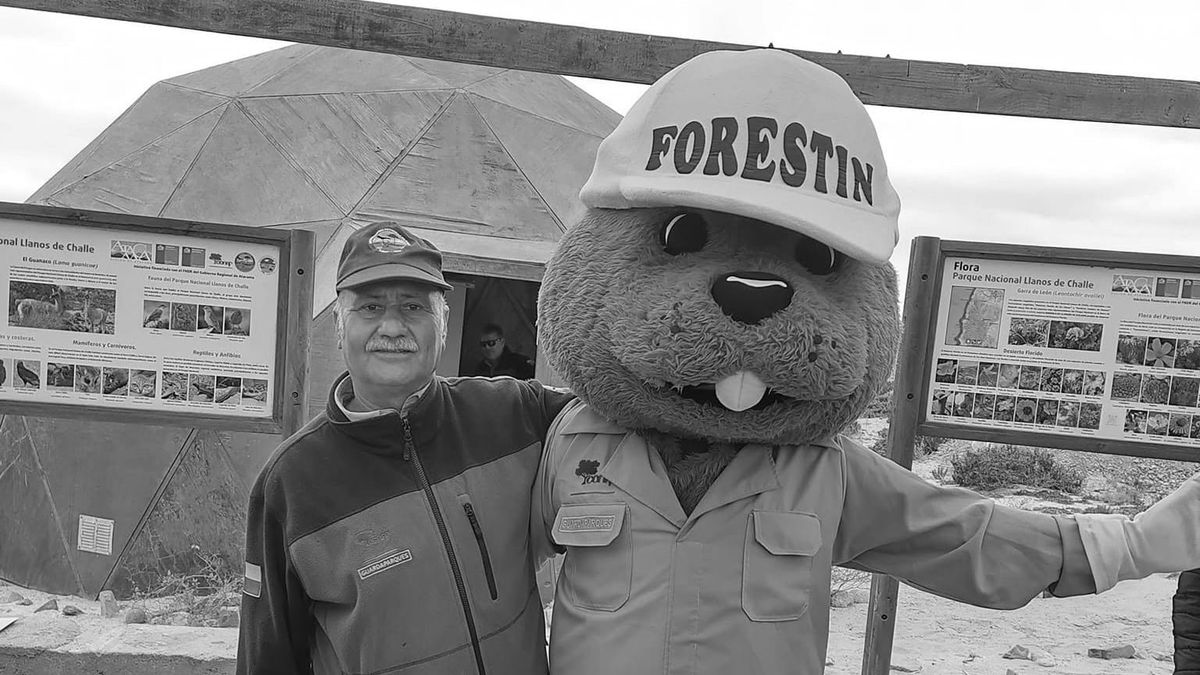
Llanos de Challe became a national park in 1994. Villegas joined the ranger staff and spent many years patrolling its hills, ravines, roads, and shoreline. He monitored wildlife, assisted researchers, guided visitors, and responded to incidents involving illegal hunting and animals struck by vehicles. The job gave him greater financial security and, as he later said, improved his quality of life.
The physical demands were familiar to him. He had grown up in the region and had already spent years working outdoors. He knew the distances, the scarcity of water, and the risks of traveling through isolated areas. He also understood the communities around the park and the ways conservation rules affected them.
In a 2011 interview, Villegas described the divided local response to Llanos de Challe. Some residents supported the protection of the desert and its wildlife. Others objected to restrictions on gathering firewood and conducting mining activities. These had long provided fuel, employment, and income. Some people came to regard CONAF, Chile’s forestry and protected-areas agency, as an institution that stood between them and their livelihoods.
Villegas explained this resentment without dismissing it. He had earned his own living from the land before joining the agency charged with protecting it. As a ranger, he had to enforce rules, explain why familiar activities were restricted, and maintain relationships with the people who lived near the park. In 2021, CONAF honored him nationally for community engagement.
His work also involved long periods in remote parts of the park, where a medical emergency could become fatal. In 1998, he was on duty with another ranger, Héctor Araya López, after the two men had patrolled the Minillas sector. That evening, Araya ate rice and eggs, drank coffee, washed, and went to bed. Minutes later, he began gasping for breath.
Villegas tried to help him and considered where assistance might be found. Canto del Agua was too far away. Carrizal Bajo was closer, though there were no telephones available. An ambulance arrived after four in the morning. Araya was already dead.
Villegas remained with his colleague’s body through the night. Araya had a wife and a one-month-old baby. Recalling the death years later, Villegas said simply, “It affected me greatly.”
His public statements were generally direct. He spoke about weather, work, neighbors, and particular events rather than offering broad claims about conservation. In 2022, he appeared with fellow ranger Fernando Mercader in a short oral-history film about the flowering desert. The film was part of a project documenting the natural and cultural memory of Huasco province.
For Villegas, the desert bloom was familiar, though never routine. He had seen the hills during the long intervals when little grew and had watched the flowers return after the right combination of rain and temperature. His knowledge came from living and working in the same territory over many years.
Colleagues and local residents described him as generous with that knowledge. He helped scientists working in the park and received visiting journalists with courtesy. He showed people where to look, what species they were seeing, and how the landscape changed through the seasons. His understanding of Llanos de Challe had been formed through labor before it became part of his professional work.
During his lifetime, a trail in the park was named the Sendero Alberto Villegas. Family members said he accepted the honor with humility and pride. The name recognized a ranger whose connection to the area extended well beyond his years of employment.
The trail crosses the dry terrain he had traveled since his youth. It passes through a landscape of cacti, gravel, pale grasses, and seasonal flowers. Villegas first knew that country while herding animals and supporting his family. He later spent much of his working life helping others understand why it was worth protecting.