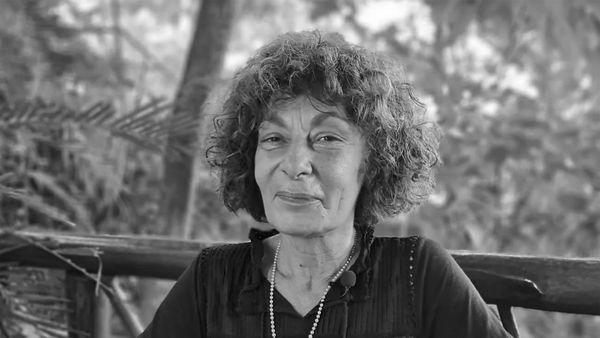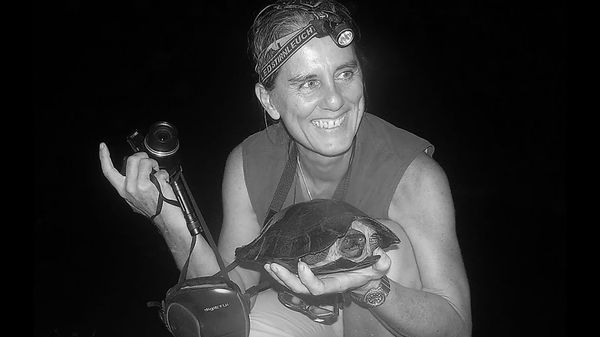
Carolina Joana da Silva helped explain how the Pantanal works
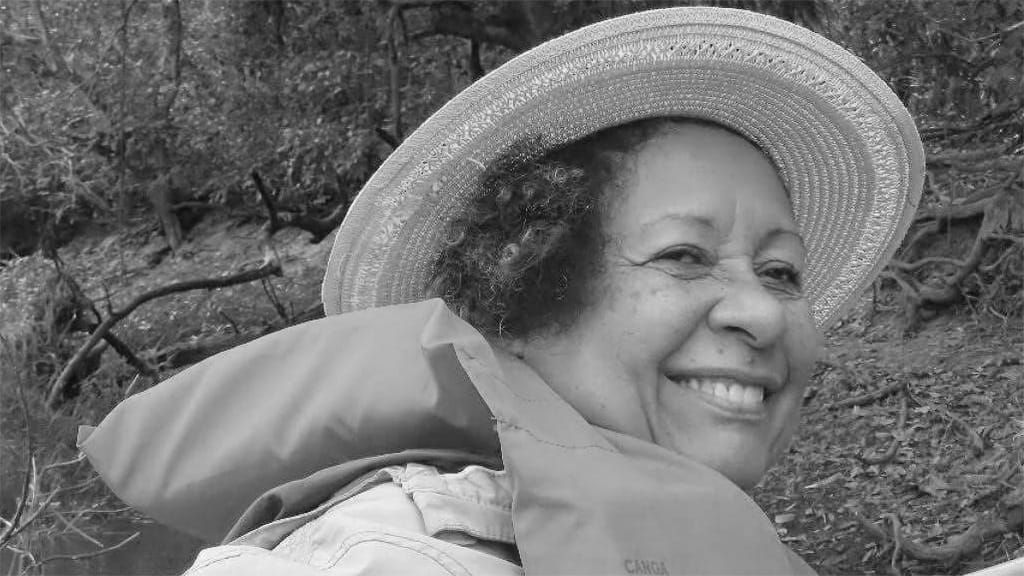
Carolina Joana da Silva spent her career studying the Pantanal’s floods and the forces reshaping the vast Brazilian wetland. She helped train generations of local researchers and argued that conservation must include the riverside communities whose lives depend on its waters.
Each year the water spreads across the Pantanal. Months later, it retreats. At its fullest, the flood pulse inundates much of a wetland covering some 150,000 square kilometres of central South America, an area roughly the size of Nepal. Months later, land appears again.
Carolina Joana da Silva spent much of her career watching this happen. In Cáceres, on the upper Paraguay river in Brazil, she measured the workings of the flood: nutrient flows, sediment, dissolved oxygen, plant growth and decay. The measurements helped show how the wetland functioned.
Professor Silva, who died of liver cancer on August 16th, aged 75, came to see the Pantanal as a system extending well beyond the flooded plain. Water entering it began hundreds of kilometres away in the surrounding highlands, or planalto. As forests and other vegetation there were cleared, the timing and volume of flows downstream changed. Her hydrological work showed that clearing hundreds of kilometres upstream could change the wetland below.
She also became involved in managing the Pantanal Biosphere Reserve and in debates over how conservation should treat the people who lived there. She worked with ribeirinhos, the people living along its rivers, and with artisanal fishers, whose decades of experience could detect changes in flood timing and fish movements that scientific models sometimes missed.
She also regarded their presence as part of the wetland’s protection. Fishing communities occupying rivers and floodplains could help deter unregulated development and the conversion of land to pasture.
Much of Silva’s influence came through students. She helped build a generation of researchers who could study the Pantanal from within Mato Grosso rather than arrive only for field seasons from elsewhere. Her family life often overlapped with the work. Her children sometimes accompanied field classes in the Pantanal and Serra das Araras; students came to her home to work. At the Earth Summit in Rio de Janeiro in 1992, she lost sight of her six-year-old son, Pedro, amid the crowds at the parallel People’s Summit. He was found two hours later.
Later she worked on restoring damaged stretches of the wetland. She helped identify riparian plants along the Paraguay and Cuiabá rivers and began collecting seeds that might eventually be used to rehabilitate degraded areas.
In 2020 roughly 2.5 million hectares burned in the Brazilian Pantanal, close to a third of it. Another severe fire season came in 2024, when burning began unusually early after prolonged drought, scant rain and exceptional heat. Annual flooding normally limits fire and keeps much of the wetland productive. As water recedes for longer periods, vegetation that would have been flooded can instead become fuel.
She warned that some of the damage came later. Fire could smoulder underground in accumulated plant matter. When rains returned, residues could wash into the water, affecting aquatic food chains and contributing to fish deaths. Restoring damaged areas would require seeds in quantities that were not readily available.
The Paraguay river still rises and falls at Cáceres. Its depth is recorded, as are the temperature of its water, the sediments it carries and the plants along its banks. Some of the researchers making those measurements were trained by her students.